
Top 5 Zero-Trust Security Tools in 2025
The concept of cybersecurity has shifted dramatically over the past decade. In the early 2010s, businesses relied heavily on firewalls and VPNs to keep attackers out. The assumption was simple: if you were inside the network, you could be trusted. Fast forward to 2025, and this approach no longer works. Cloud adoption, hybrid work models, and advanced AI-powered threats have expanded the attack surface beyond recognition.
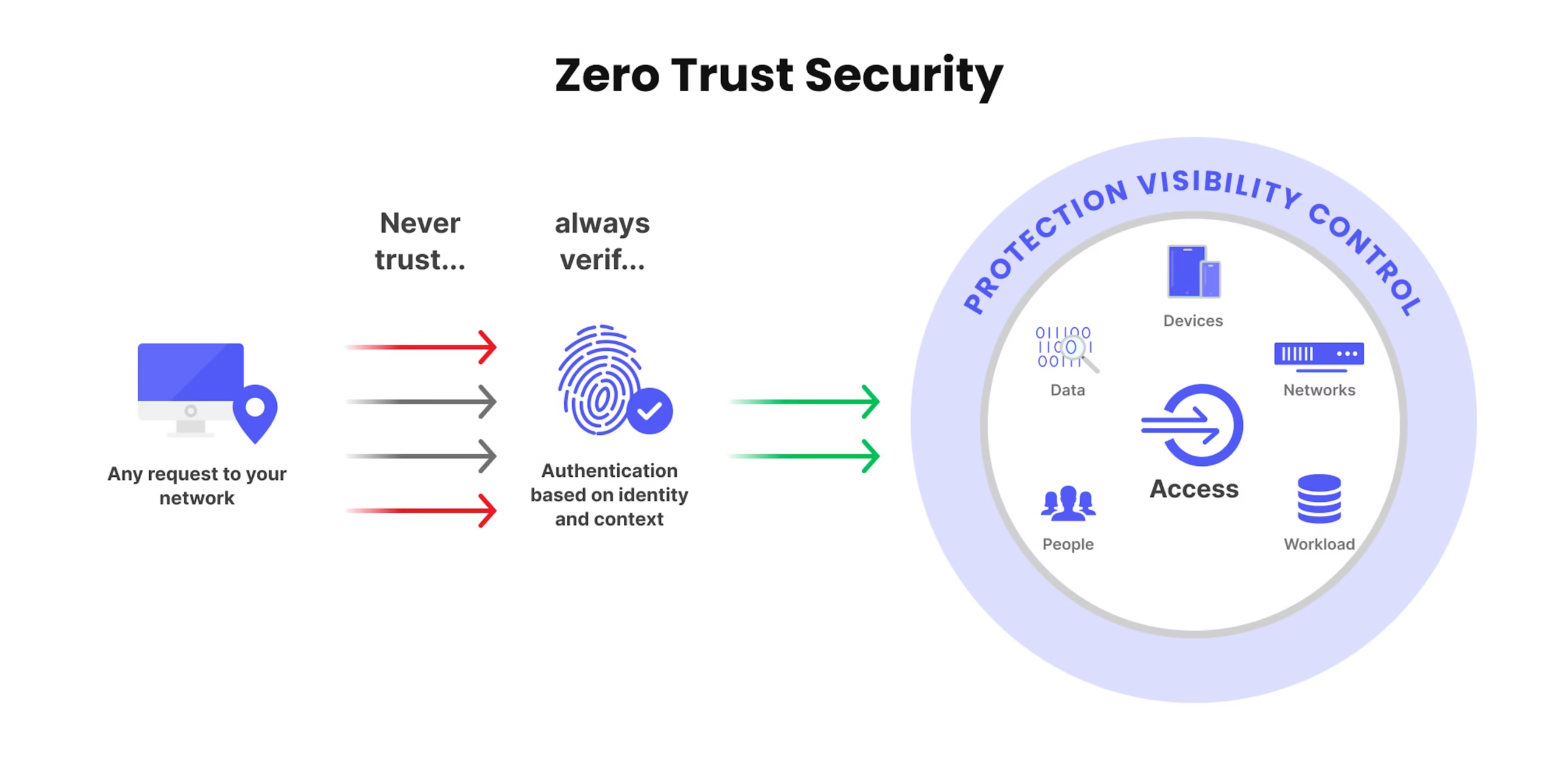
That’s where zero-trust security comes in. Zero-trust flips the script by requiring continuous verification of users, devices, and applications—regardless of location. Instead of trusting everything inside the perimeter, it enforces the principle of “never trust, always verify.”
Today, we’ll dive into the Top 5 Zero-Trust Security Tools in 2025, exploring their features, best use cases, and why they’re essential for modern businesses.
1. Zscaler Zero Trust Exchange
Zscaler has become a leader in cloud-based security, and its Zero Trust Exchange is a top choice for enterprises managing remote and hybrid teams. By ensuring secure access to applications without placing them on the public internet, it reduces exposure to ransomware, phishing, and insider threats.
- Key Features:
- User-to-app and app-to-app secure connections
- Inline inspection to block malicious traffic in real time
- Cloud-native scalability with global coverage
- Use Case: A multinational company allowing employees in multiple countries to safely access internal apps without using a traditional VPN.
2. Palo Alto Networks Prisma Access
Palo Alto Networks continues to be a powerhouse in cybersecurity, and Prisma Access is its flagship zero-trust platform. Leveraging AI-driven intelligence, Prisma Access continuously evaluates risks and enforces granular policies across devices and users.
- Key Features:
- AI-based analytics for real-time risk detection
- Integrated secure web gateway (SWG) and CASB
- Built-in data loss prevention (DLP)
- Use Case: Enterprises needing consistent, AI-enhanced protection for thousands of employees working remotely.
3. Okta Identity Cloud
Zero-trust is not just about network access—it’s also about identity. Okta Identity Cloud leads the way in access management by ensuring the right individuals have the right level of access at all times.
- Key Features:
- Adaptive multi-factor authentication (MFA)
- Seamless single sign-on (SSO)
- Risk-based access control using AI signals
- Use Case: A SaaS startup protecting customer data by requiring adaptive authentication for every login.
4. Microsoft Entra
Microsoft’s Entra suite integrates identity, access, and zero-trust principles into a single ecosystem. Designed to work seamlessly with Azure AD and Microsoft 365, Entra is especially valuable for businesses already using Microsoft products.
- Key Features:
- Conditional access based on user and device risk
- Role-based access controls (RBAC)
- Native integration with Microsoft cloud services
- Use Case: A mid-sized business using Microsoft 365 and Teams, seeking to extend zero-trust protection to its remote employees.
5. CrowdStrike Falcon Zero Trust
Best known for its endpoint protection, CrowdStrike Falcon Zero Trust combines endpoint detection and response (EDR) with identity threat protection. It continuously monitors device behavior and user activity to block breaches before they escalate.
- Key Features:
- Continuous risk scoring for devices and identities
- Integration with existing EDR solutions
- Real-time decision-making for access requests
- Use Case: An organization with high-value intellectual property that needs proactive protection against identity-based attacks.
How to Choose the Right Zero-Trust Tool
With so many tools on the market, how do you choose the right one? Here are three guiding questions:
- What’s your infrastructure?
If you’re Microsoft-heavy, Entra is a natural fit. If you’re cloud-agnostic, Zscaler might be a better option. - What’s your biggest risk?
For identity threats, Okta and CrowdStrike shine. For large-scale, AI-enhanced network security, Palo Alto Prisma Access is ideal. - What’s your scale?
Startups may prefer flexible, lightweight identity solutions, while enterprises may need comprehensive platforms with global coverage.
The Future of Zero-Trust Security
Zero-trust is no longer a “nice-to-have”—it’s becoming the gold standard for cybersecurity in 2025 and beyond. With AI-powered attacks growing in sophistication, continuous verification and adaptive policies will be critical.
By 2026, expect even tighter integration between zero-trust, machine learning, and biometric authentication. Businesses that adopt these tools early will not only prevent breaches but also build trust with their customers and partners.
The traditional security perimeter has collapsed, and the rise of remote work, IoT devices, and cloud adoption has made zero-trust essential. The Top 5 Zero-Trust Security Tools in 2025—Zscaler, Palo Alto Prisma Access, Okta, Microsoft Entra, and CrowdStrike Falcon Zero Trust—offer a comprehensive path to stronger digital resilience.
👉 Whether you’re a startup, SME, or enterprise, investing in the right zero-trust tools today will protect your business tomorrow.




One Comment