How Blockchain Is Changing Finance in 2025
Blockchain technology has moved far beyond the hype of cryptocurrencies. In 2025, it is becoming the backbone of a new financial ecosystem—reshaping banking, payments, investments, and even compliance. What was once considered experimental is now driving innovation in the global economy.
In this article, we’ll explore how blockchain is transforming finance in 2025, the benefits it offers, the challenges it faces, and what the future holds for businesses and consumers alike.
Decentralized Finance (DeFi) Goes Mainstream
Decentralized Finance, or DeFi, has been one of the most significant shifts brought by blockchain. In 2025, DeFi platforms allow people to borrow, lend, trade, and earn interest without relying on traditional banks.
Smart contracts handle transactions automatically, removing middlemen and reducing costs. This means a farmer in Africa or a freelancer in Asia can access financial services that were previously out of reach.
Cross-Border Payments Made Faster and Cheaper
Traditional international transfers often take days and come with high fees. Blockchain solves this by enabling near-instant cross-border payments with significantly lower costs.
In 2025, global companies are adopting blockchain-powered solutions like RippleNet and Stellar for real-time settlements. This not only speeds up transactions but also increases financial inclusion for millions who depend on remittances.
Tokenization of Assets
One of the most exciting developments in 2025 is tokenization—the process of representing real-world assets as digital tokens on the blockchain.
From real estate and stocks to art and commodities, tokenization makes it easier to invest in fractional ownership. Imagine buying 1% of a luxury property in New York or a share of a Picasso painting—all made possible through blockchain.
Enhanced Security and Fraud Prevention
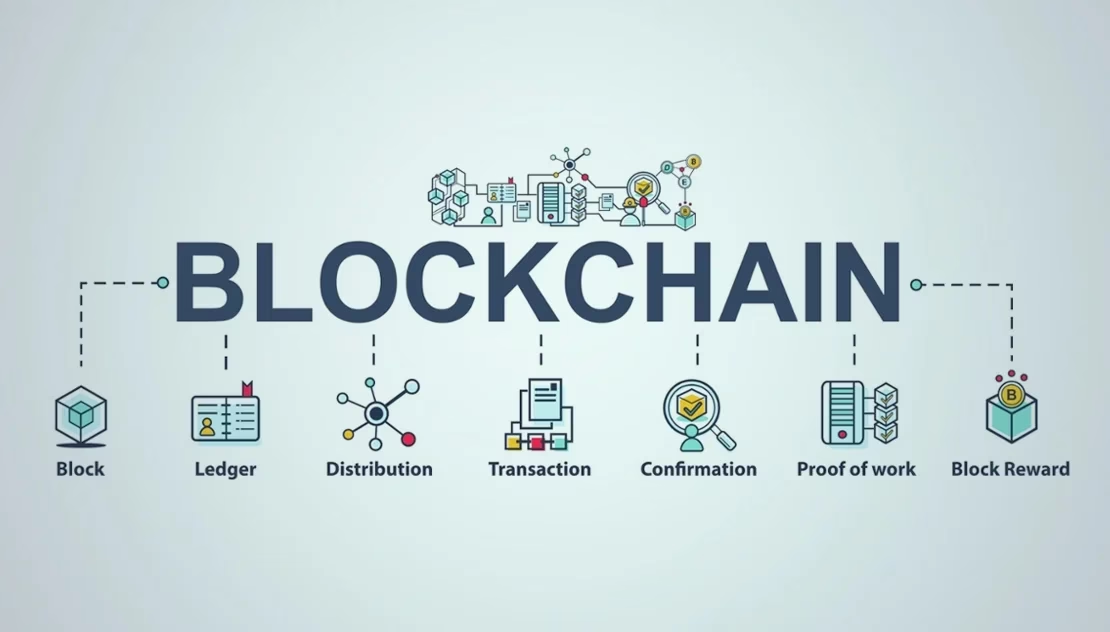
Blockchain’s immutable ledger ensures that financial transactions are transparent and tamper-proof. In 2025, banks and financial institutions use blockchain to prevent fraud, improve KYC (Know Your Customer) processes, and enhance compliance with global regulations.
This increased transparency builds trust among users and reduces risks of corruption and money laundering.
Central Bank Digital Currencies (CBDCs)
Governments are no longer watching blockchain from the sidelines. In 2025, more than 50 countries are experimenting with or have already launched Central Bank Digital Currencies (CBDCs).
CBDCs combine the efficiency of blockchain with the stability of government-backed currencies. They offer faster payments, reduced transaction costs, and more financial control for central banks.
Challenges of Blockchain in Finance
Despite the progress, blockchain adoption still faces hurdles:
- Regulatory uncertainty: Different countries impose varying rules on cryptocurrencies and blockchain services.
- Scalability issues: Processing thousands of transactions per second remains a challenge.
- Energy concerns: Although newer blockchains are more eco-friendly, energy consumption is still a hot topic.
These challenges must be addressed for blockchain to fully realize its potential in global finance.
The Future of Blockchain in Finance
By 2030, blockchain could underpin much of the world’s financial infrastructure. AI and IoT integrations will make smart contracts even smarter, while tokenization could expand into almost every sector.
The future is a blend of traditional finance and decentralized innovation, offering consumers faster, cheaper, and more inclusive financial services.
In 2025, blockchain is no longer just about Bitcoin—it’s about reshaping the very foundation of finance. From DeFi and cross-border payments to asset tokenization and CBDCs, the transformation is well underway.
The question is not if blockchain will change finance, but how far this change will go. One thing is clear: the future of finance will be more decentralized, more transparent, and more accessible thanks to blockchain.